
What gsm actually measures
Recommended weights by product
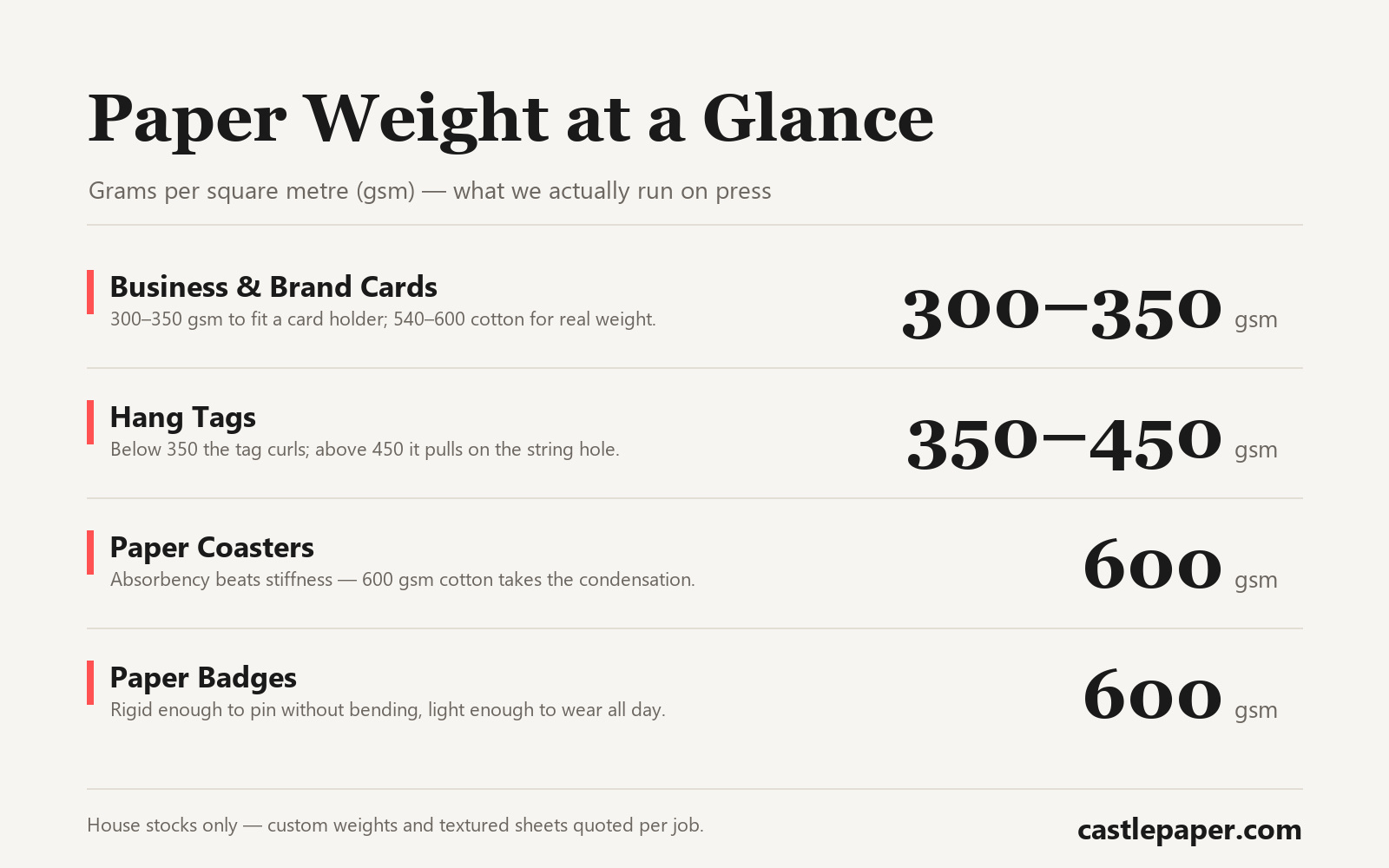
Business and brand cards — 300–350 gsm for a card that still fits a card holder; 540–600 gsm cotton if you want the card to feel like an object rather than a slip of paper.
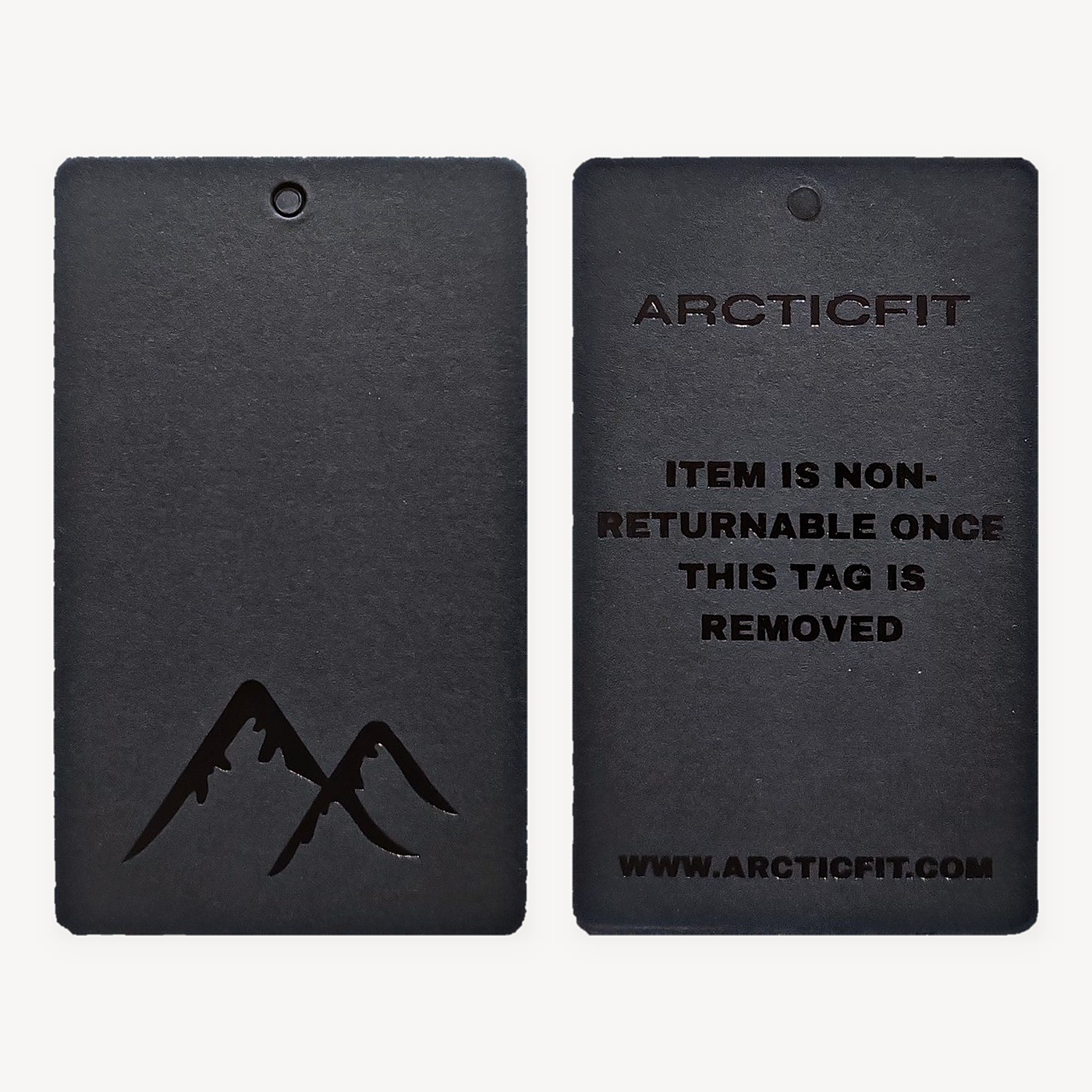
Hang tags — 350–450 gsm. Below that the tag curls on the garment; above it, a heavy tag can pull on the string hole over time. On dark or textured card, 400 gsm and up holds a foil hit cleanly.
Paper coasters — absorbency matters more than stiffness. Thick cotton in the 600 gsm range, or absorbent pulp board, so the coaster takes condensation off the glass instead of sticking to it.
Paper badges — thick cotton around 600 gsm is the sweet spot: rigid enough to pin on a shirt without bending, light enough that a badge worn all day is not noticed.
Coated or uncoated?
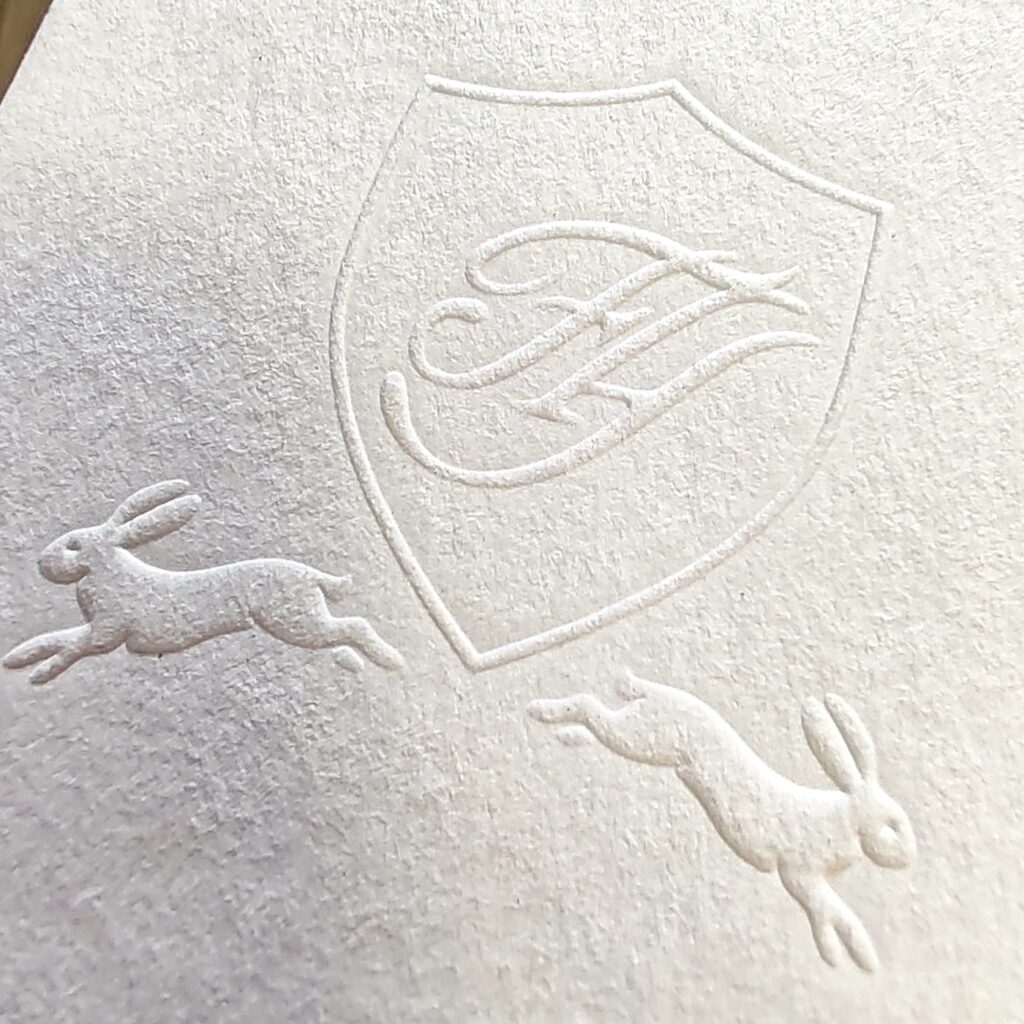
Uncoated stock has no surface layer, so ink soaks in slightly and the paper keeps its natural texture. It is the right choice for letterpress and blind deboss, because the fibres need to compress rather than crack.
Coated stock has a mineral layer that keeps ink sitting on the surface, giving sharper detail and more saturated colour. It is the right choice for full-colour photography and for foil stamping on fine detail.
A common mistake is asking for deep letterpress on a coated sheet. The coating fractures along the impression line and the result looks punched rather than pressed — and on the reverse side a visible crack appears.

How weight interacts with the finish
Letterpress — wants thick, soft, uncoated paper, 400 gsm and up. The heavier the sheet, the deeper the impression you can hold.
Foil stamping — works on almost any weight, but fine detail releases better on a smooth coated surface.
Blind deboss — needs bulk. On a thin sheet a blind impression simply does not catch enough light to be visible.
Die cutting — remember that a shaped card wastes more of the sheet, so an unusual shape on heavy stock costs more per unit than the same shape on a lighter board.
