
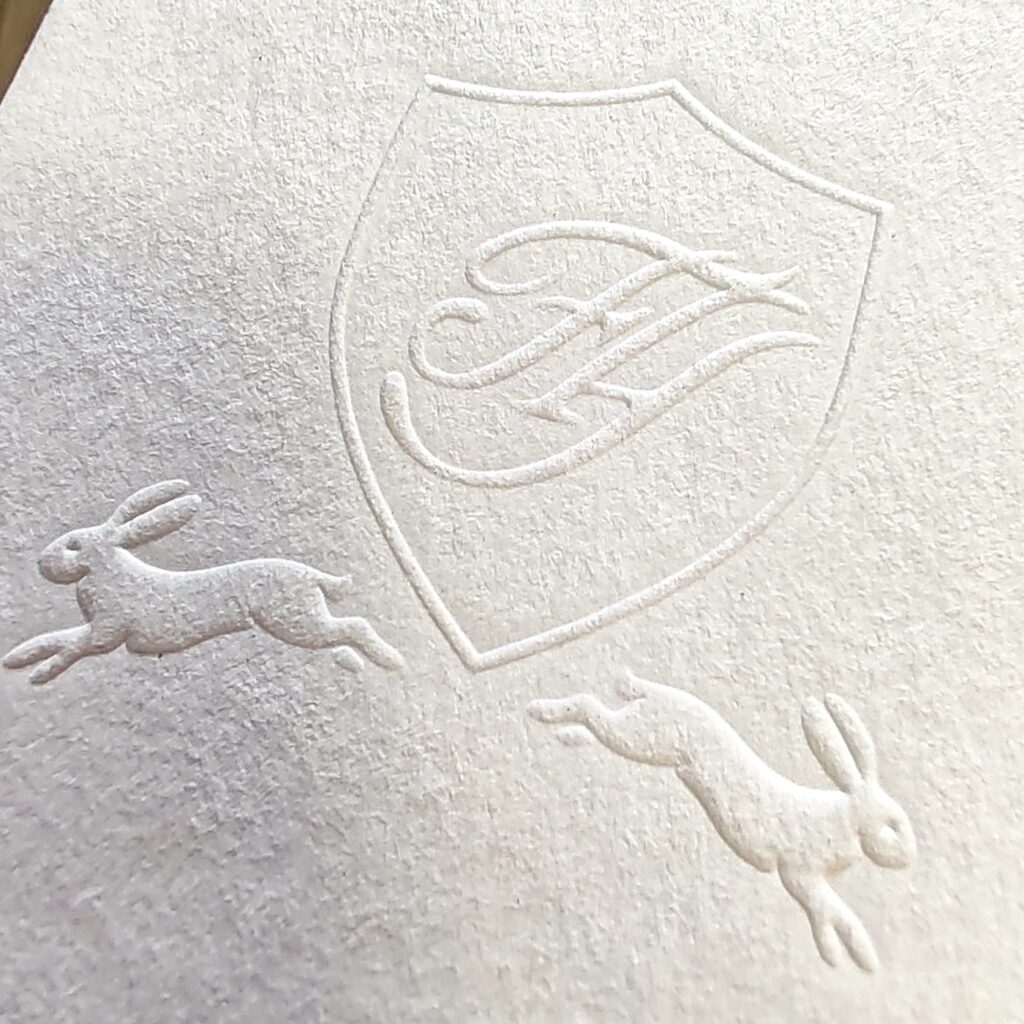
Macro shot of a blind emboss impression on textured white cotton paper, showing the raised shield outline and leaping rabbits

Paper Weight Guide: What GSM to Choose for Cards, Hang Tags and Coasters

Paper weight is the specification most buyers guess at, and the one that most changes how a finished card, hang tag or coaster actually behaves. Get it wrong and a beautiful design arrives feeling flimsy, or a hang tag tears out of the garment on the first try. This guide explains what gsm means, the weights we recommend for each product, and how weight interacts with the printing finish.

What gsm actually measures
Gsm stands for grams per square metre — the weight of one square metre of that particular sheet. It is not the same as thickness, because a bulky uncoated board can be thick at a lower gsm than a dense coated sheet, but in practice the two move together and gsm is the number your printer will ask for.
A rough feel reference: 120–160 gsm is office paper and light flyers, 250–350 gsm is a standard business card, 400–600 gsm is a premium card or a rigid hang tag, and above about 800 gsm you are in board territory.
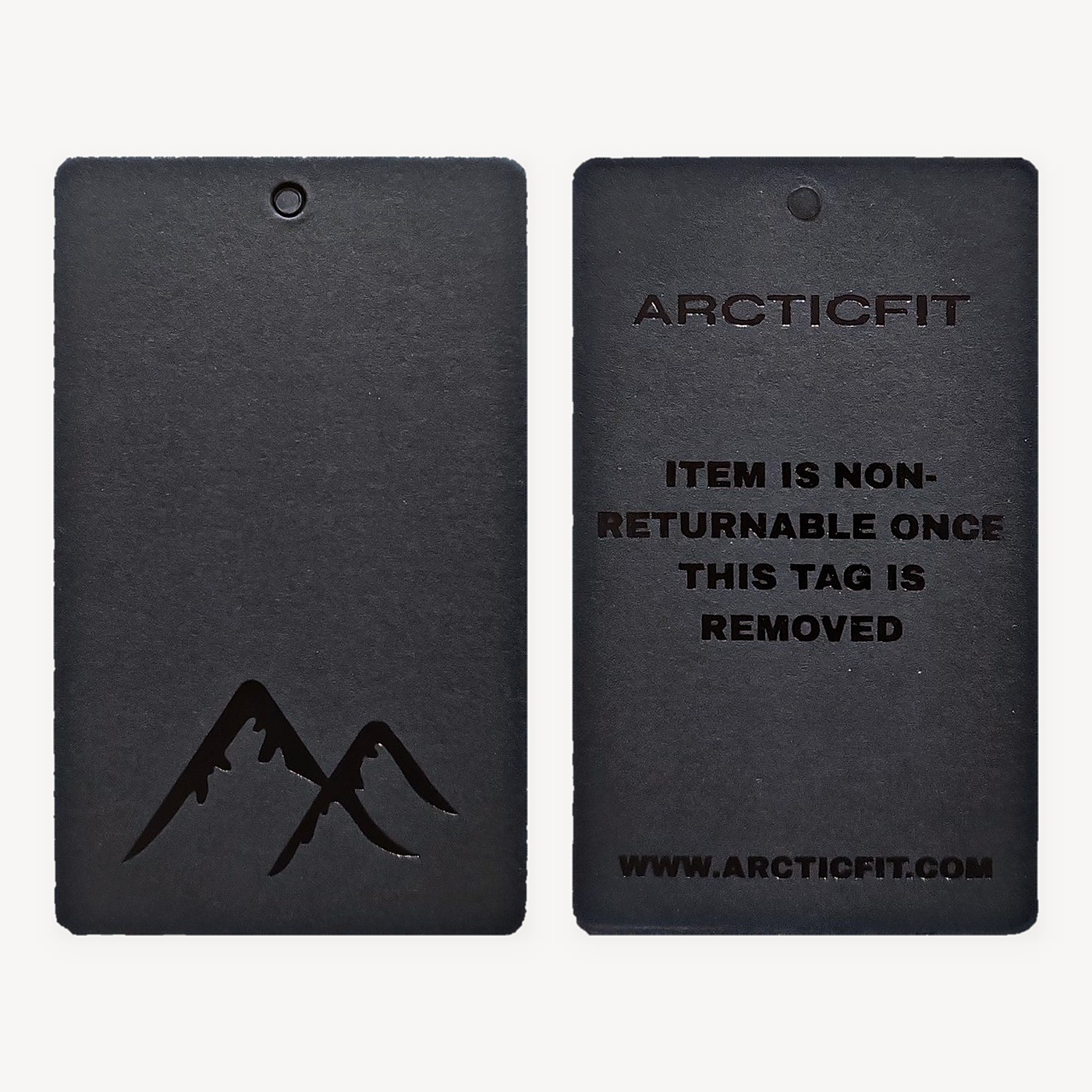
Pair of black card hang tags shown side by side, front and back, both with black foil stamping

Recommended weights by product

Business and brand cards — 300–350 gsm for a card that still fits a card holder; 540–600 gsm cotton if you want the card to feel like an object rather than a slip of paper.

Hang tags — 350–450 gsm. Below that the tag curls on the garment; above it, a heavy tag can pull on the string hole over time. On dark or textured card, 400 gsm and up holds a foil hit cleanly.

Paper coasters — absorbency matters more than stiffness. Thick cotton in the 600 gsm range, or absorbent pulp board, so the coaster takes condensation off the glass instead of sticking to it.

Paper badges — thick cotton around 600 gsm is the sweet spot: rigid enough to pin on a shirt without bending, light enough that a badge worn all day is not noticed.
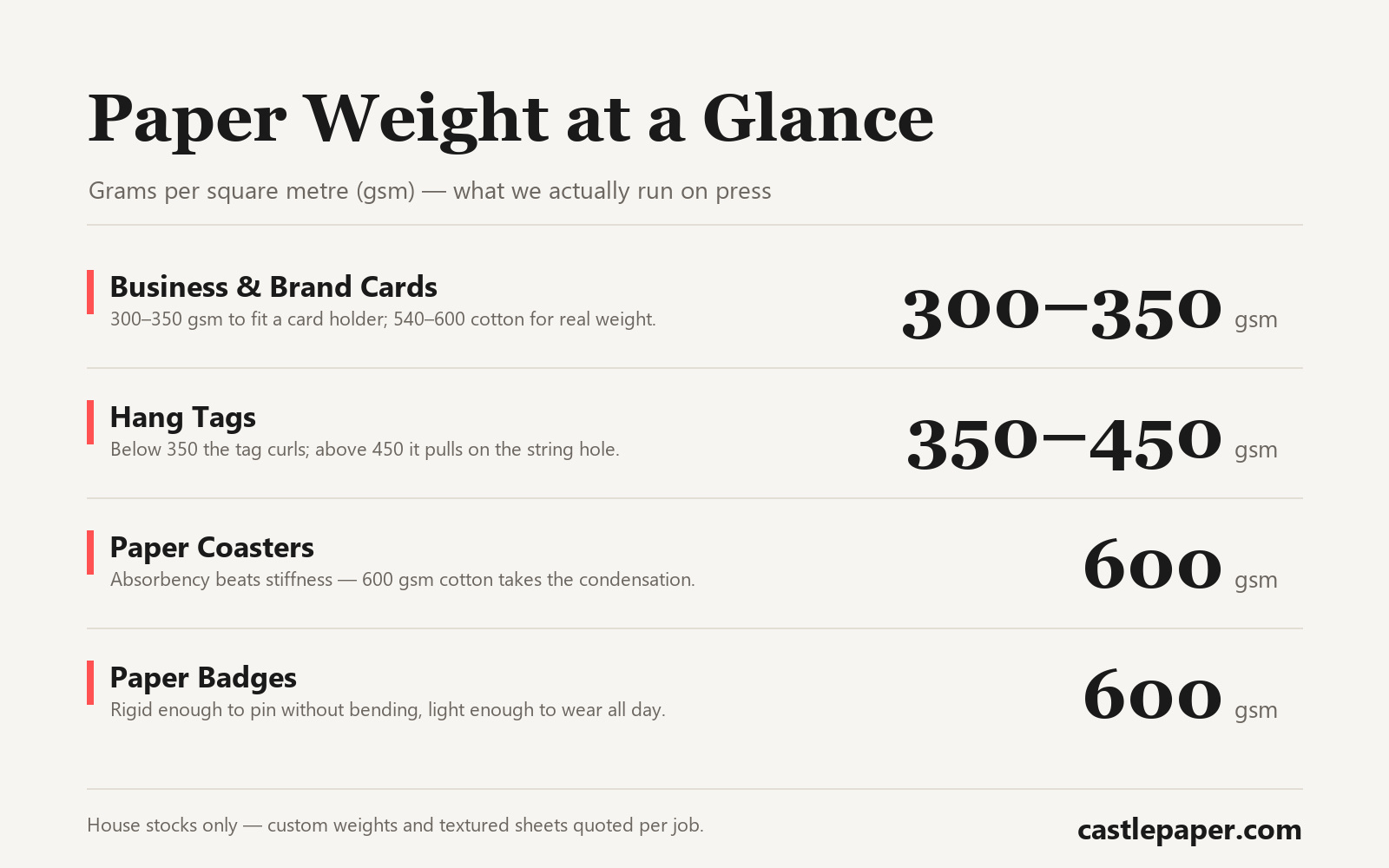
Paper weight quick reference chart: recommended gsm for business cards, hang tags, paper coasters and paper badges
Tap to open the full-size chart.

Coated or uncoated?

Uncoated stock has no surface layer, so ink soaks in slightly and the paper keeps its natural texture. It is the right choice for letterpress and blind deboss, because the fibres need to compress rather than crack.

Coated stock has a mineral layer that keeps ink sitting on the surface, giving sharper detail and more saturated colour. It is the right choice for full-colour photography and for foil stamping on fine detail.

A common mistake is asking for deep letterpress on a coated sheet. The coating fractures along the impression line and the result looks punched rather than pressed — and on the reverse side a visible crack appears.

Macro detail of a blind debossed logo pressed into cream specialty paper, showing the recessed lettering and visible paper fibres

How weight interacts with the finish

Letterpress — wants thick, soft, uncoated paper, 400 gsm and up. The heavier the sheet, the deeper the impression you can hold.

Foil stamping — works on almost any weight, but fine detail releases better on a smooth coated surface.

Blind deboss — needs bulk. On a thin sheet a blind impression simply does not catch enough light to be visible.

Die cutting — remember that a shaped card wastes more of the sheet, so an unusual shape on heavy stock costs more per unit than the same shape on a lighter board.

Round custom paper badges on a cotton paper sheet, five cartoon faces pressed into the surface by letterpress from one die-cut run

What weight does to shipping and display

Weight compounds quickly. Moving a 5,000-piece card run from 300 gsm to 600 gsm roughly doubles the paper weight and pushes the shipment up a carton size, which shows up in the freight quote far more than in the unit price. If the cards are going in the post, the lighter stock may be the better commercial decision even when the heavier one feels better in the hand. If they are handed over across a counter, heaviness is doing marketing work and it is worth paying for.

Not sure which weight to pick?

Tell us the product, the finish and the quantity. We will recommend a stock and send the quote within 24 hours, factory direct with a low minimum order. Request a quote — or browse the full product range first.
Shopping Cart