
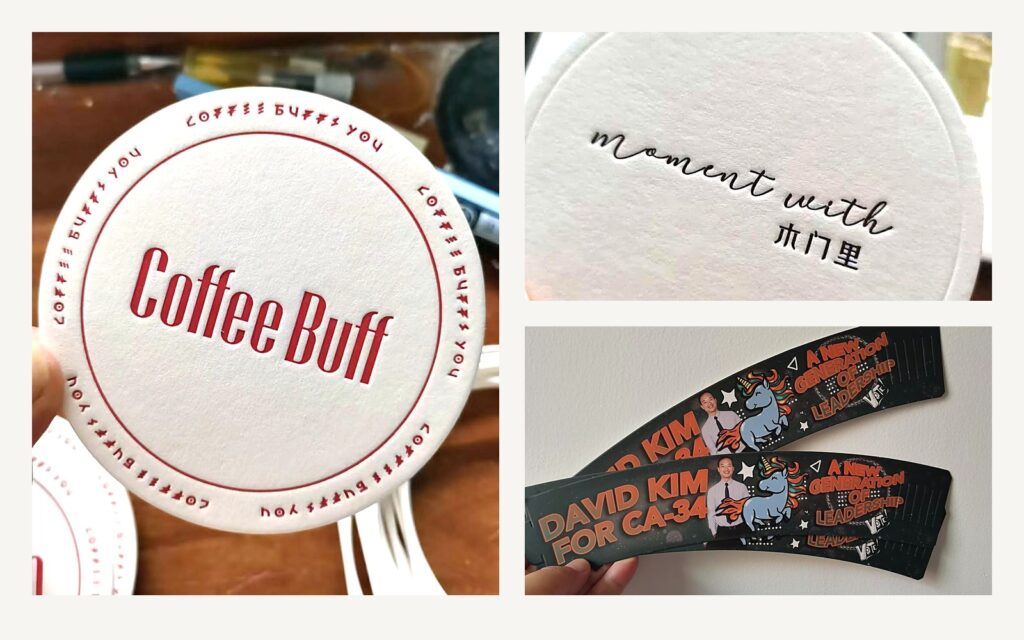
Two objects, two different jobs
The sleeve travels. It goes out of the door with the customer, gets photographed, sits on a desk. It is seen by people who were never in your shop.
The coaster stays. It stays on the table for the length of the meeting, and often gets taken home or moved to a second table. It is seen by the person sitting opposite, repeatedly, for an hour.
Together they cover both cases: one leaves, one lingers. Done as a set they reinforce each other. Done separately they read as two unrelated purchases, because that is what they are.
” alt=”Custom letterpress printed cotton paper coaster in red beside a black printed cup sleeve, showing a matched coaster and sleeve set” width=”1200″ height=”900″/>
What “matching” actually means
It does not mean printing the same logo twice. Four things have to agree, and if any one of them disagrees the set looks assembled rather than designed.
Colour. Same Pantone reference, not “the same red”. A red mixed for coated stock and a red mixed for uncoated kraft will not match, and side by side on a table the difference is obvious. If the two pieces are on different stocks, they need two separate colour matches — which is a reason to put both on the same stock.
Paper tone. A bright white coaster next to a warm cream sleeve looks like a mistake even when both are technically white. Warm tones sit together; a cool white next to a warm one fights.
Process language. A foil-stamped logo next to a flat four-colour print is two different brands. Pick one: foil and blind deboss, or full colour, or one-colour letterpress. Mixed processes work when one piece is deliberately quiet — a foil logo on the coaster, nothing but a small mark on the sleeve.
Logo scale. The same logo at 40mm on a coaster and at 15mm on a narrow sleeve reads as the same mark. At 40mm and 8mm it reads as two logos.
Coasters are not small cards
The most common mistake in a matched set is specifying the coaster as if it were a card. A coaster has one job a card does not: it has to take water off the glass.
Go heavy and absorbent. Cotton paper around 600 gsm, or an absorbent pulp board, so condensation wicks into the sheet instead of beading on top. A 350 gsm card coaster will curl within one drink.
Do not coat it. Lamination or a heavy varnish makes the surface waterproof, which means the water stays on the coaster, which means the glass sticks to it and lifts it off the table. The coaster then ends up on the floor. Uncoated is not a cost saving here, it is the functional choice.
The sleeve is the opposite. It wants to resist spills, because it is being held. So a matched set on the same stock is a genuine compromise: cotton paper absorbs what runs down the cup and still survives, which is why letterpress-printed cotton coasters and sleeves pair so well. If you need a waterproof sleeve, keep the coaster on cotton and match the colour rather than the stock.
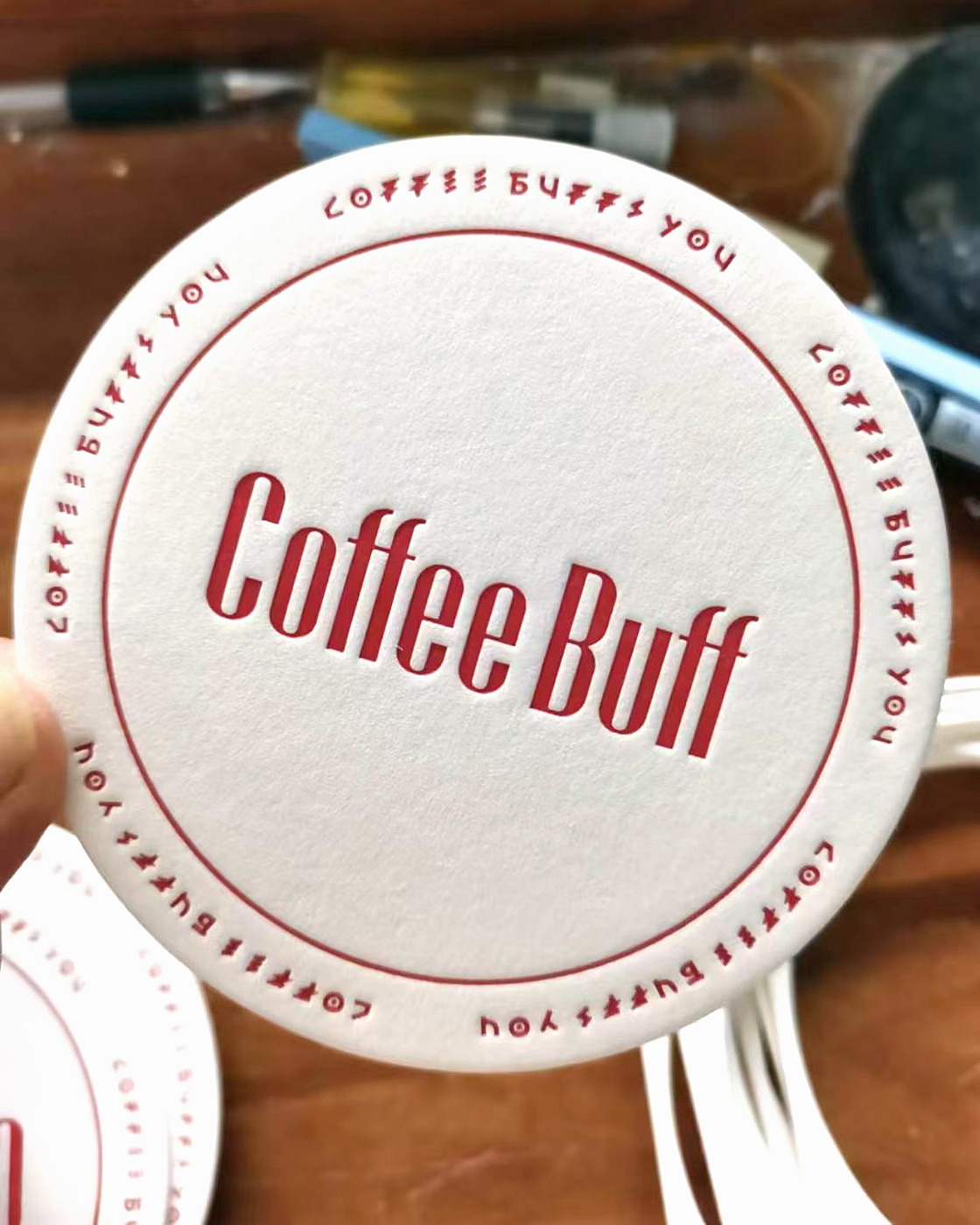
” alt=”Letterpress printed cotton paper coaster in red reading Coffee Buff, with the type pressed into the sheet so the impression stays readable when wet” width=”1200″ height=”900″/>
How a set changes the price
One set-up instead of two. Plates, die lines, colour matching and machine set-up are fixed costs per job. Running a coaster and a sleeve in the same session absorbs those once.
One shipment. Two small orders pay freight twice, and small shipments are where freight per unit hurts most.
One proof. This is the underrated saving. Approving two proofs means two rounds of artwork comments, and usually two rounds of reprints.
The exception: if the two pieces are on different stocks, in different colours, with different processes, then they are two jobs regardless and you should not expect a set discount. A set saves money when it is genuinely one design decision applied twice, not when two unrelated specs are ordered on the same day.
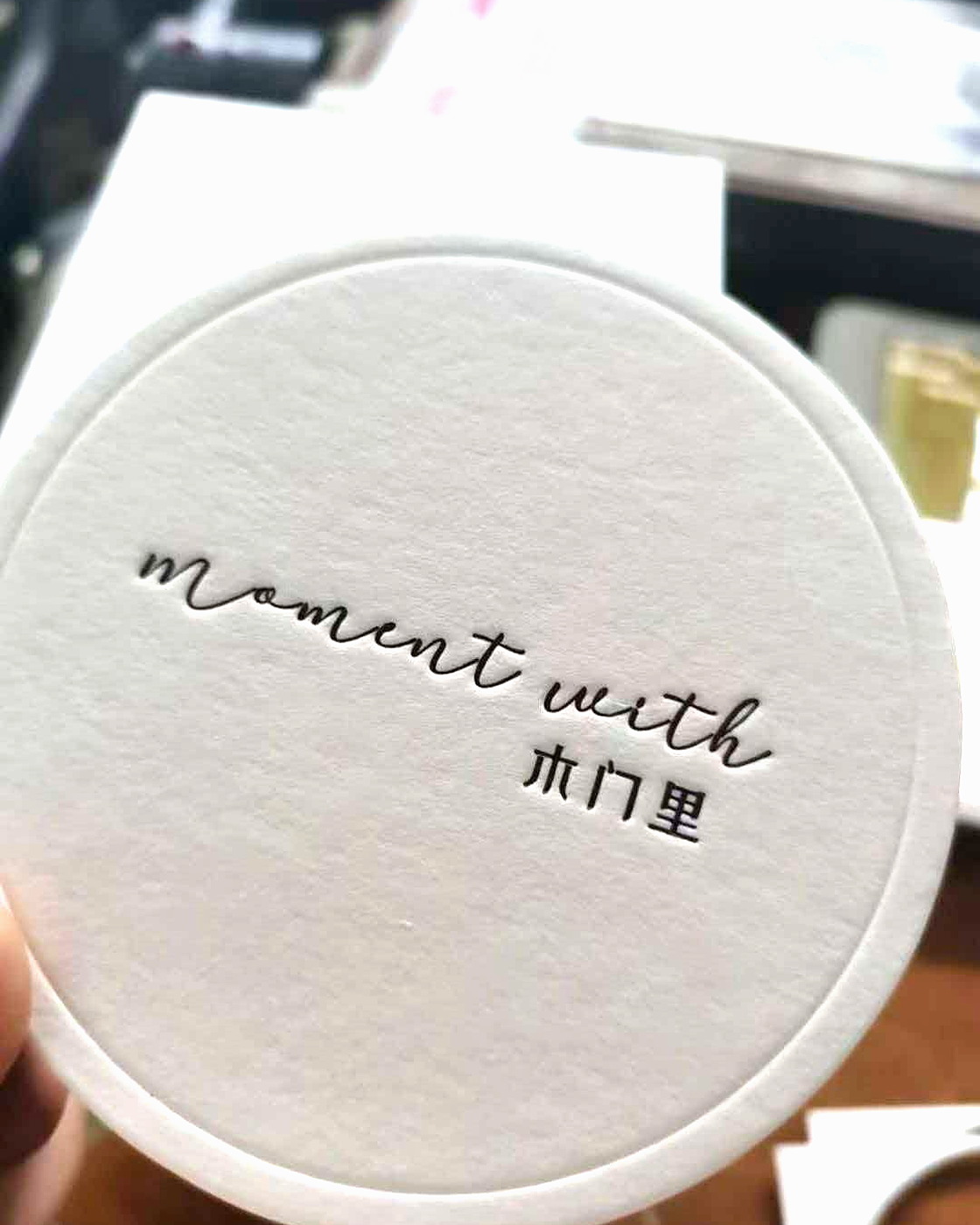
” alt=”Cream cotton paper coaster letterpress printed with the words moment with in a script face, showing the deep impression and soft paper edge” width=”1200″ height=”900″/>
A spec sheet you can copy
Coaster. 95mm round or 90mm square, cotton paper 600 gsm, uncoated, one or two colour letterpress or blind deboss, no lamination, 3mm bleed, back side blank or a single small mark.
Sleeve. Die cut to your cup, kraft 280 gsm or white card 300 gsm, one or two colour print, uncoated unless the venue is outdoors, seam on the reverse, artwork kept clear of the glue line.
Shared. The same Pantone for any spot colour, the same logo file, and one approval covering both pieces.
If the coaster is letterpress and the sleeve is flat printed, they can still belong together — put the impression on the object that is picked up and looked at closely, and keep the sleeve quiet. That is a deliberate hierarchy, not a mismatch.

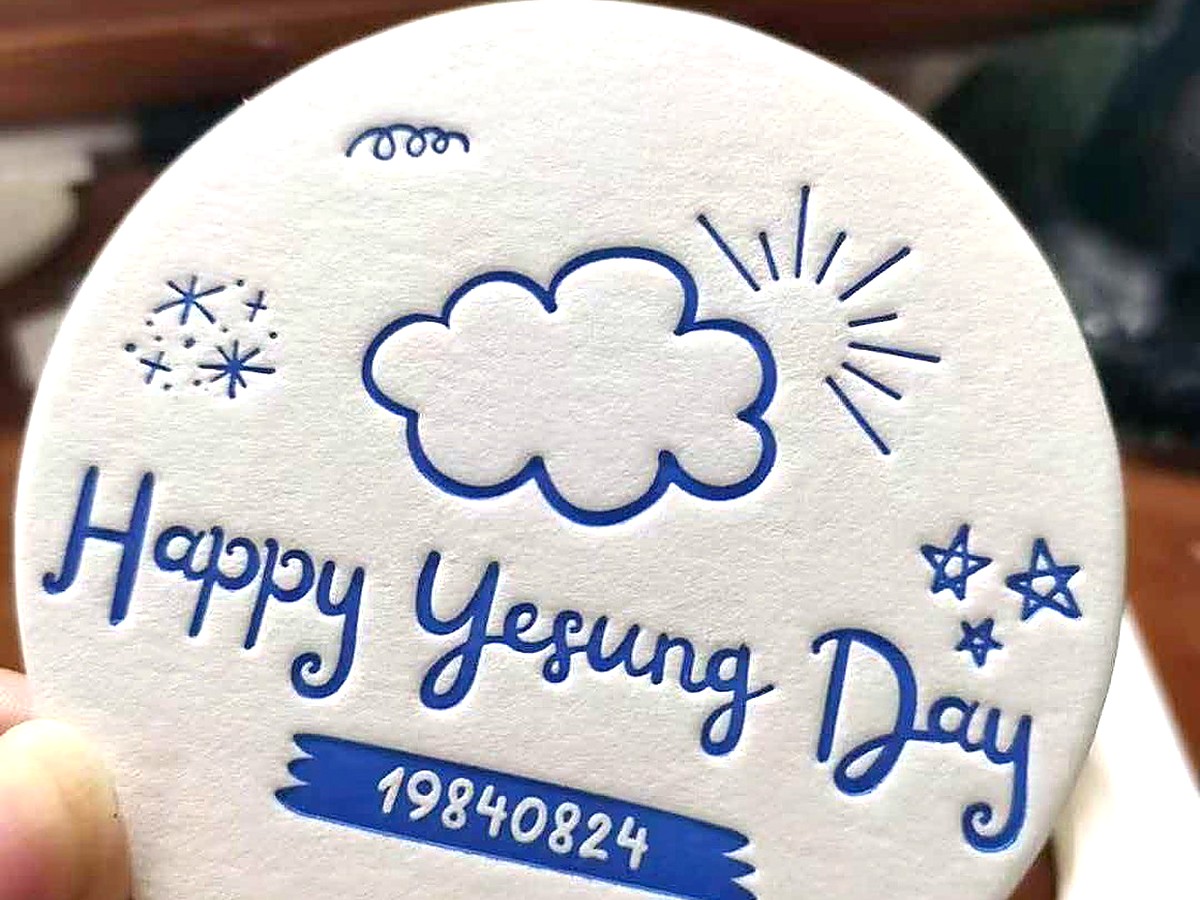
” alt=”Cotton paper coaster letterpress printed in terracotta with a floral pattern and Chinese lettering, used to show how a warm one-colour print holds detail on uncoated stock” width=”1200″ height=”900″/>
Frequently asked
Can the coaster and sleeve be different shapes? Yes, and they usually should be. A round coaster and a tapered sleeve do not clash; what makes them a set is colour, stock and mark, not geometry.
What if I only need coasters? Then order coasters. A badly matched sleeve is worse than no sleeve, and the coaster is the piece that stays on the table anyway. See round paper coasters and die-cut shaped coasters.
Will the print survive washing? No paper coaster survives a dishwasher, and it should not be expected to. Cotton stock takes a wipe and keeps its print; coated stock looks better for the first drink and worse after that.