
Start from what leaves the booth
A brochure is read once, if at all, and it is heavy enough that people actively decide not to take it. A coaster, a badge or a hang tag is small, useful and looks like a gift rather than a sales document. It gets taken, it gets used, and it stays in the bag because throwing away something useful feels wasteful.
That is the whole logic of the list below: every item is either useful, wearable or collectable. Nothing on it requires the visitor to read.
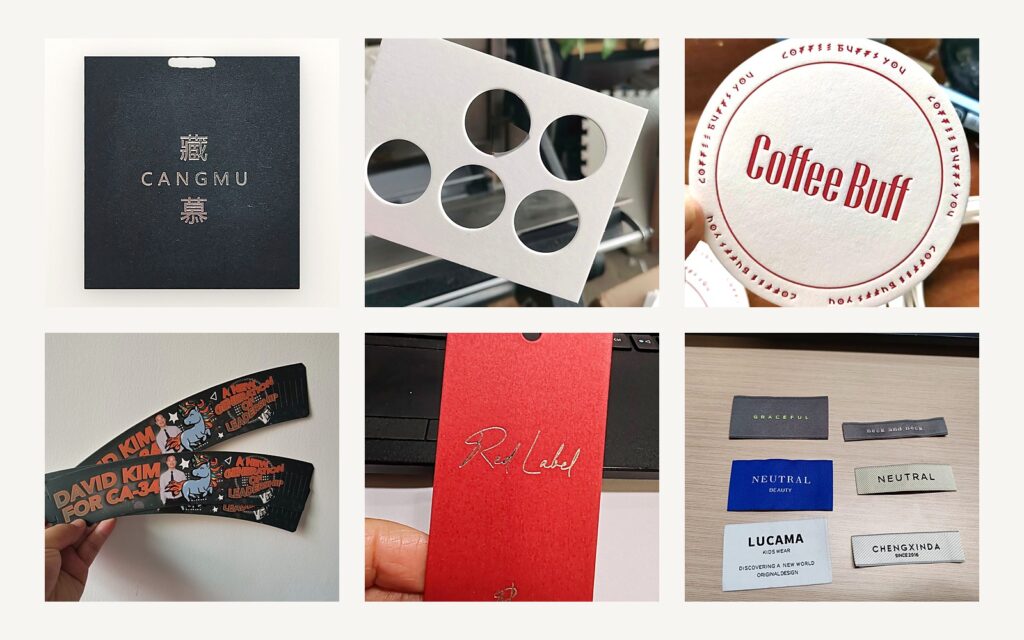
” alt=”Selection of custom printed paper products laid out for a trade show: a black foil hang tag, a die-cut badge sheet, a red letterpress coaster, a printed cup sleeve, a red duplex hang tag and woven clothing labels” width=”1200″ height=”900″/>
The six pieces that do the work
1. Business cards. Still the piece that gets handed over, written on and photographed. 500 minimum for a three-day show; 800 if two people are on the stand. Heavy stock with a real finish, because a card is the only item a buyer holds while deciding whether to keep talking to you.
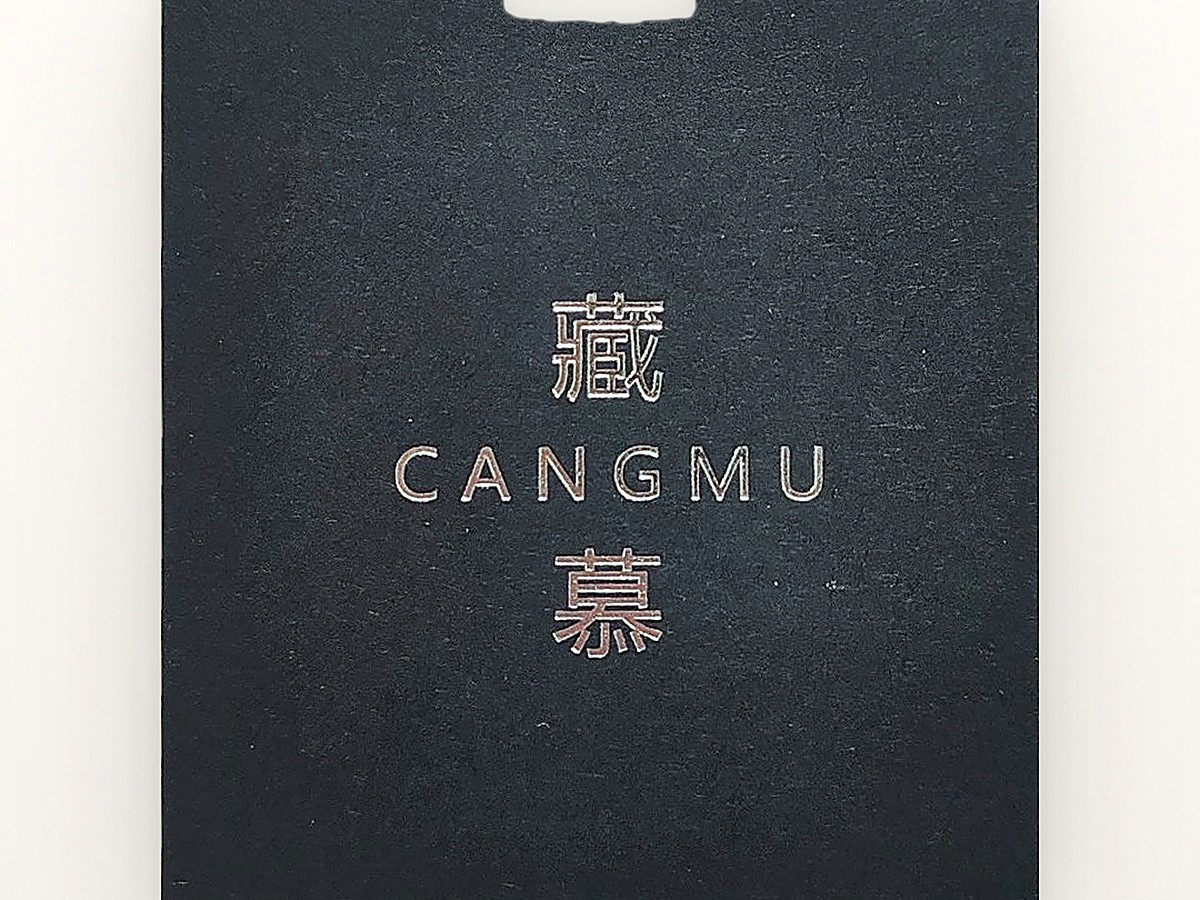
2. Hang tags. The best sample carrier there is. A tag on a string can be tied to a fabric swatch, a product sample or a competitor comparison, and it makes the sample look like a finished product rather than a scrap. Use them on anything you hand over that is not already packaged.
3. Coasters. The most-taken item on this list, because every hotel room and every meeting table needs one and nobody feels guilty taking it. Cotton stock, uncoated, one strong mark. Order more of these than you think you need.
4. Cup sleeves. Only if the stand is serving drinks, and then they are the highest-visibility item you own: everyone walking past sees a row of people holding your logo. Die cut to the cups the venue or caterer actually supplies — confirm that before you print.
5. Paper badges. A pin-back badge turns your own team into walking signage and gets photographed by visitors. The useful format is a badge on a lanyard or a pin, printed with a name and a role, because a name badge starts conversations that a logo alone does not.
6. Woven or printed labels. For anyone selling apparel, this is the item that proves you are a manufacturer rather than a trader. Sewn into a fabric swatch or stapled to a sample, a label answers the “can you actually make this” question without a sentence being spoken.
Quantities for a three-day show
Work backwards from footfall, not from optimism. A realistic assumption is that around one in ten visitors takes something, and that half of those take more than one item.
| Item | 500 visitors | 1,500 visitors | Note |
|---|---|---|---|
| Business cards | 500 | 1,000 | Count both staff, add 20% |
| Coasters | 300 | 800 | The most-taken item |
| Hang tags | 200 | 500 | One per sample handed over |
| Cup sleeves | 250 | 600 | Only if serving drinks |
| Paper badges | 60 | 120 | Staff plus spare for reprints |
| Woven labels | 100 | 250 | Attached to fabric swatches |
Count backwards from the show date
The show date does not move. Everything upstream of it can. This is the schedule that leaves room for one thing to go wrong, which on a first order it usually does.
Six weeks out — final artwork. All files approved, colours specified, die lines confirmed. Nothing new is designed after this point.
Five weeks out — physical proof. Approve a real printed sample, not a screen. This is where a spot colour turns out wrong or a small logo turns out illegible, and there is still time.
Four weeks out — production. Plates, dies, print, die cutting, any hand finishing.
Three weeks out — ship. Sea or air depending on destination, with a week of buffer built into the date you were given.
One week out — in hand. Unpack, count, and check that what arrived matches what you approved. Anything missing at this point can still be couriered to the venue.

” alt=”Red duplex card hang tag with a silver foil logo, the kind of heavy tag used to make a product sample look finished on a trade show stand” width=”1200″ height=”900″/>
What to skip
Thick product catalogues. Unless a buyer specifically asks, they are carried once and abandoned. A single-page spec sheet plus a QR code does the same job and survives the flight home.
More than six categories. Every extra item halves the quantity you can afford of the ones that work. Six pieces done properly beat twelve done cheaply.
Large-format posters. The venue usually supplies signage, and a poster that has to be carried home is a liability.
Anything plastic. In most European venues it is now either banned or embarrassing. Paper does the same job and packs flat.
Items with no use after the show. If the only thing a visitor can do with it is throw it away, they will do that before they leave the hall.

” alt=”Die-cut sheet of round paper badges pressed into thick cotton stock, ready to be punched out and worn at an event” width=”1200″ height=”900″/>
After the show
Keep a box of each item at the office. The follow-up email that references the coaster the buyer took home is answered far more often than a generic one, and a hang tag with your logo on it is the cheapest thing to include in a sample parcel for the next three months.
Then reorder before the next show from the same files and the same die. Second runs are faster and cheaper than first runs, and the colour will match the batch the buyers already have.

” alt=”Custom woven clothing labels in several weaves and colours laid out flat, used as a sample that proves manufacturing capability on a trade show stand” width=”1200″ height=”900″/>